Cancer Prevention Vaccines: Protecting Your Health
In This Article
Cancer Prevention Vaccines: Protecting Your Health

Dr. Ananya Ghosh
Updated on June 17, 2024

Medically verified by Dr. Arya
Fact checked by Dr. Pournami
Oncology
10 min read
We take all the precautionary steps to avert cancer. With the advent of modern technologies and the advancing research, now we can prevent some of it by cancer prevention vaccines.
Are you aware of these vaccines? Ever wondered how effective these are, or do they really work, or if they have any significant side effects?
Karepedia is here to help you understand these vaccines and keep yourself healthy and happy.
Do Vaccines Prevent Cancer?
Well, partly yes.
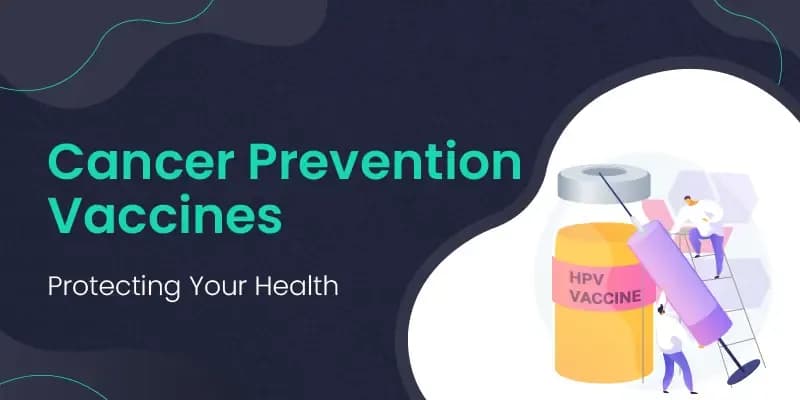
Presently, there are two vaccines approved by the researchers for safe use on humans- HPV vaccines and Hepatitis-B vaccines.
This cancer prevention vaccine is safe and effective to use. Human Papillomavirus (HPV), which is a sexually transmitted disease is the main cause of several kinds of cancer like:
- Cervical cancer
- Anal cancer
- Vaginal cancer
- Vulvar cancer
Hepatitis B vaccine helps prevent hepatitis that is the leading cause of:
- Liver cancer.
Do Cancer Prevention Vaccines Help Treat Cancer?
Unfortunately, no. The vaccines that are available in the market for use are preventive vaccines.
The vaccines help you in not catching cancer by improving your body’s immune cells to impart in their “memory” about the cancer antigen.
After taking the shot if any cancer antigen gets access into your body will be identified by your memory immune cells. It will then be killed asap.
Once a person is infected with cancer, taking the vaccine won't help much. As the cancer cells take over the body’s control of immunity.
When cancer invades one’s body, the only option to treat is chemotherapy, radiotherapy and/or surgery, as deemed suitable by the oncologist. There are different medications used in chemotherapy treatment.
Several researchers are trying to work on vaccines that can be used as a therapeutic medication for treating cancer. It is under clinical trials.
How Do These Vaccines Work?
We need to understand the basics of cancer and vaccines.
- Cancer can be caused by various reasons like trauma, some food ingredients, overuse of substances like alcohol, tobacco, or by infection from bacteria and viruses.
- Most of the cancer is caused by unknown causes, called idiopathic in medical jargons. Vaccines on the other hand are effective only for diseases which are caused by bacteria or viruses.
- So, we want to emphasise on the cancers which are caused due to any virus or bacteria and the effective vaccines that can prevent those viral infections and progress to cancer.
- There are some vaccines which treat cancer. Also called therapeutic cancer or immunotherapy. Such vaccines act as a treatment regimen of cancer and help fight the disease by improving the immunity of the body and preventing the tumour cells from growing further.
- HPV and HBV vaccines work by targeting our immune cells and making them empowered enough to fight against the cancer in the body.
New vaccines for cancer that may come in future
Our talented scientists are working day and night to find newer technologies to roll our cancer prevention vaccines.
We can expect positive results in our near future. Let us have a look at the possible cancer prevention vaccines on which scientists are working:
- Bladder cancer
- Brain tumours
- Colorectal cancer
- Kidney cancer
- Breast cancer
- Leukaemia (Blood cancer)
- Melanoma (Skin cancer)
- Myeloma (Plasma cell cancer)
- Lung cancer
- Pancreatic cancer
- Prostate cancer
Who Can Take These Vaccines?
The government approved vaccines in India are HPV and HBV. Let’s see the schedule of taking these vaccines.
HPV Vaccine:
Only females can take this vaccine.
Age group of 9 to 14 years – 2 doses
- First dose: Immediately.
- Second dose: After 6 months.
Age group of 15 to 45 years – 3 doses.
- First dose: Immediately.
- Second Dose: After 1 month.
Third dose: After 6 months.
For HBV:
- First dose: Immediately after birth.
- Second dose: After 1–2 months.
- Third dose: After 6–18 months.

 5 min
5 minYour Genes And Prostate Cancer Risk: What To Know
 6 min
6 minThe BRCA Genes: Understanding Their Role in Breast and Ovarian Cancer
 10 min read
Genetic Insights Into Personalised Cancer Treatments
Get a Callback Now
Side Effects of These Vaccines
The vaccines are very safe and have limited side-effects. Your healthcare provider will usually guide you when to take the vaccine.
A child who is sick from any illness is not permitted to take the shot and the schedule is delayed as per convenience.
If someone develops any side-effects, the nurse or any medical professional will take effective measures to treat the same.
Still, some of the most commonly seen side effects to any vaccine are:
- Muscle pain
- Flu-like symptoms
- Injection site pain
- Joint pain
- Upset stomach
These side-effects should not hold you back from taking the lifesaving cancer prevention vaccines.
Moreover, if any person had any previous incident of acute reaction to any vaccine, they must seek medical advice as to whether to take the HPV vaccine or not.
Cancer causing viruses are quite common amongst people. About 1 in every 4 adults have HPV infection. Hepatitis B is the most easily spread infection through body fluid contact, faster than HIV.
Presently, the cancer prevention vaccines target only two types of viruses- HPV and HBV. With the advancement of science and technologies, in the future we can expect to include a wider category of cancers and tumours to be prevented by cancer prevention vaccines.
As the problem is serious, the solution of willingly taking the vaccines must be our main priority.

Cancer is the most feared word in health sciences.
Vaccines are for preventing cancer caused by viruses and bacteria.
Cancer prevention vaccines work by improving the immunity of the body to fight cancer cells.
Presently, cancer vaccines are not effective in treating cancer, it can only prevent you from getting cancer.
Many new vaccines are in their research process, soon to be rolled out if successful clinical trials are found.
HPV vaccines can be taken by women of any age.
Hepatitis B vaccine is taken during childhood.
Every vaccine has some or the other side effects that are mild and temporary.
Effectiveness of the vaccine is more than the side effects.
We can all be safe with the life saving vaccines to lead a happy and healthy life.