10 Health Benefits of Turmeric and Curcumin
In This Article
10 Health Benefits of Turmeric and Curcumin

Pooja
Updated on February 05, 2025

Medically verified by Dr. Arya
Fact checked by Sreemoyee
Wellness
10 min read
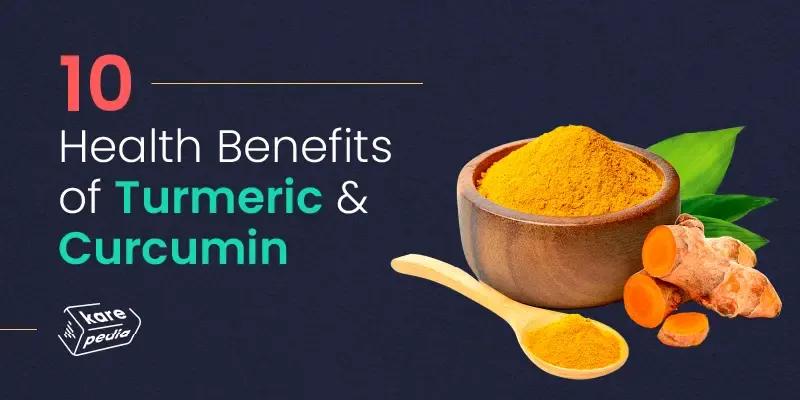
Did you know turmeric has many health benefits for your brain and body?
Many of these benefits are from its main active ingredient which is known as curcumin.
Turmeric is one of the most effective nutritional supplements.
Through this blog by Karepedia, you will get to know about the benefits of turmeric and curcumin.
What is Turmeric and Curcumin ?
Turmeric is a spice which gives curry yellow colour and also is used as a medicinal herb. According to researchers, turmeric has compounds with medicinal properties. These are termed as curcuminoids. Most important one is curcumin, one of the active ingredients in turmeric.
10 Health Benefits of Turmeric
- Medicinal properties
Turmeric contains bio active compounds which have medicinal properties. It is a very strong antioxidant and has a powerful anti-inflammatory effect. Curcumin content of turmeric is only around 1-6% by weight.
According to studies, this herb uses turmeric extracts that contain dosage usually exceeding 1 gm per day which means it is very difficult to use it just as a spice.
This is the reason most of them use it as a supplement. In addition to this, curcumin is not absorbed into your bloodstream. So, for experiencing full effects of curcumin, its bioavailability needs to be improved.
Bioavailability refers to the rate at which the body absorbs a substance which is to be improved.
It is normally consumed with black pepper which contains piperine. It is a natural substance which enhances the absorption of curcumin by 2000%.
It is also fat soluble which means it can break down and dissolve in fats and oil. So it is recommended to take curcumin supplements along with a meal which is high in fat.
- Anti-inflammatory properties
Curcumin is a substance which helps in fighting inflammation even though high dosages are required to produce medicinal results. It has the potential to fight the inflammation which plays a role in many health conditions and diseases. So it is important in preventing and helping this condition.
- Rich Antioxidant
Ageing and disease has many mechanisms behind them.One of the major mechanisms is oxidative damage. Free radicals, highly reactive molecules with unpaired electrons are involved here.
Free radicals react with fatty acids , proteins or DNAs.
Curcumin is a potential antioxidant which can neutralise free radicals due to its chemical structure. According to various animal and cellular studies, it is suggested that curcumin may block the action of free radicals and it may stimulate the action of other antioxidants.
In order to confirm this clinical studies conducted in humans are needed.
- Boosts brain derived neurotrophic factor
Brain is always having the capability of forming new connections and in certain areas, they can multiply and increase in number.
Brain derived neurotrophic factor plays a main role in memory and learning and also it can be bound in areas which are responsible for eating, drinking and body weight. Most common brain disorders have been linked with the decreased levels of BDNF protein.
The disorders included depression, alzheimer's disease. Both animal and human studies found that the levels of BDNF can be increased by curcumin.
This may be effective in delaying or reversing brain diseases and age related decreases in brain function. Memory and attention is also improved by this. However there are no scientific studies in order to prove this statement.

 10mint
Sexual Health Matters: How To Maintain Your Sexual Health ?
 10mint
Your Guide to Sexual Health Screening and Preventive Measures
 10 mints
STDs in Women: Comprehensive Guide on Symptoms and Treatments
Get a Callback Now
- Lower your risk of heart disease
As we all know , heart disease is one of the main reasons for death in our world. It is suggested that curcumin may help in protecting against many steps. It will also help in improving the function of the endothelium or the lining of blood vessels.
Dysfunction in the endothelium is the major driver of heart disease. This happens when your endothelium is unable to regulate blood pressure , blood clotting and various other factors.
According to different studies , curcumin will also lead to an improvement in cardiovascular health. It can help in relieving the red inflammation and oxidation, which plays a major role in heart disease.
- Prevention of cancer
Curcumin supplements can affect many forms of cancer. According to studies , curcumin is considered as a beneficial herb in cancer treatment and has been found to affect cancer growth and development.
According to studies, it can help in the death of cancerous cells , reduce angiogenesis or the growth of blood vessels in tumours and also help in reducing metastasis or the spread of cancer. It is said that curcumin may prevent cancer initially and it will help in curing cancers of the digestive system like colorectal cancer.
- Treats Alzheimer’s disease
The most common form of dementia is Alzheimer's disease. Inflammation and oxidative damage play a major role in Alzheimer's disease and curcumin has a beneficial effect on both.
According to researchers , it is also said that curcumin may help in clearing the build up of protein tangles which are known as amyloid plaques that are caused by disease. Whether curcumin can be slow or it will even reverse the progression of Alzheimer's disease needs to be studied.
Help in Arthritis
Arthritis can be of different forms , most of them involve inflammation in the joints.According to a study on people with osteoarthritis , curcumin is considered as the most effective in relieving the pain than a placebo.
According to research, it is also similar to non-steroidal anti-inflammatory drugs (NSAIDs). Curcumin has helped in reducing the disease related inflammation and there should be more studies to understand the replacement of curcumin as a treatment for arthritis inflammation pain.
- Benefits against depression
According to researchers , curcumin has shown some significant effect in treating mood disorders. It helps in boosting the brain neurotransmitters such as serotonin and dopamine , reduces inflammation and encourages plasticity of the brain. This acts as an effective antidepressant.
Depression is linked to reduced levels of BDNF and it will also lead to shrinkage of the hippocampus. Hippocampus is the prime brain area involved in learning and memory.
Curcumin will help in boosting the BDNF Levels. According to a study conducted in 2018 , curcumin has been found to be used in treating or reducing anxiety, though studies on humans are needed to verify this.
- Delay ageing and fight age-related chronic diseases
Curcumin really helps in longevity. Curcumin acts as a potential anti-aging supplement.
1. Is it good to take turmeric every day?
Given turmeric’s various beneficial properties to health, it’s not a bad idea to take it daily. If you stick to 12 g or less, you are not likely to experience side effects such as diarrhoea, constipation, or vomiting.
2.Who shouldn’t take turmeric?
People who are pregnant or nursing, people who have gallbladder or kidney problems, those with bleeding disorders, diabetes, or iron deficiency should limit turmeric. If you have any of these conditions, ask your doctor before taking turmeric. Also, ask your doctor if turmeric would interact with any medications you’re taking.
3.Can turmeric burn belly fat?
There is research suggesting that curcumin, the main component of turmeric, might help with reducing belly fat.
As we all know , heart disease is one of the main reasons for death in our world. It is suggested that curcumin may help in protecting against many steps. It will also help in improving the function of the endothelium or the lining of blood vessels.
Dysfunction in the endothelium is the major driver of heart disease. This happens when your endothelium is unable to regulate blood pressure , blood clotting and various other factors.
According to different studies , curcumin will also lead to an improvement in cardiovascular health. It can help in relieving the red inflammation and oxidation, which plays a major role in heart disease.
- Prevention of cancer
Curcumin supplements can affect many forms of cancer. According to studies , curcumin is considered as a beneficial herb in cancer treatment and has been found to affect cancer growth and development.
According to studies, it can help in the death of cancerous cells , reduce angiogenesis or the growth of blood vessels in tumours and also help in reducing metastasis or the spread of cancer. It is said that curcumin may prevent cancer initially and it will help in curing cancers of the digestive system like colorectal cancer.
- Treats Alzheimer’s disease
The most common form of dementia is Alzheimer's disease. Inflammation and oxidative damage play a major role in Alzheimer's disease and curcumin has a beneficial effect on both.
According to researchers , it is also said that curcumin may help in clearing the build up of protein tangles which are known as amyloid plaques that are caused by disease. Whether curcumin can be slow or it will even reverse the progression of Alzheimer's disease needs to be studied.
Help in Arthritis
Arthritis can be of different forms , most of them involve inflammation in the joints.According to a study on people with osteoarthritis , curcumin is considered as the most effective in relieving the pain than a placebo.
According to research, it is also similar to non-steroidal anti-inflammatory drugs (NSAIDs). Curcumin has helped in reducing the disease related inflammation and there should be more studies to understand the replacement of curcumin as a treatment for arthritis inflammation pain.
- Benefits against depression
According to researchers , curcumin has shown some significant effect in treating mood disorders. It helps in boosting the brain neurotransmitters such as serotonin and dopamine , reduces inflammation and encourages plasticity of the brain. This acts as an effective antidepressant.
Depression is linked to reduced levels of BDNF and it will also lead to shrinkage of the hippocampus. Hippocampus is the prime brain area involved in learning and memory.
Curcumin will help in boosting the BDNF Levels. According to a study conducted in 2018 , curcumin has been found to be used in treating or reducing anxiety, though studies on humans are needed to verify this.
- Delay ageing and fight age-related chronic diseases
Curcumin really helps in longevity. Curcumin acts as a potential anti-aging supplement.
FAQs
1. Is it good to take turmeric every day?
Given turmeric’s various beneficial properties to health, it’s not a bad idea to take it daily. If you stick to 12 g or less, you are not likely to experience side effects such as diarrhoea, constipation, or vomiting.
2.Who shouldn’t take turmeric?
People who are pregnant or nursing, people who have gallbladder or kidney problems, those with bleeding disorders, diabetes, or iron deficiency should limit turmeric. If you have any of these conditions, ask your doctor before taking turmeric. Also, ask your doctor if turmeric would interact with any medications you’re taking.
3.Can turmeric burn belly fat?
There is research suggesting that curcumin, the main component of turmeric, might help with reducing belly fat.

Turmeric — and especially its most active compound, curcumin — has many scientifically proven health benefits, such as the potential to improve heart health and prevent Alzheimer’s and cancer.
It’s a potent anti-inflammatory and antioxidant. It may also help improve symptoms of depression and arthritis.
While these benefits are possible, they are limited at this time because of curcumin’s scarce bioavailability and more research is needed.